Introduction
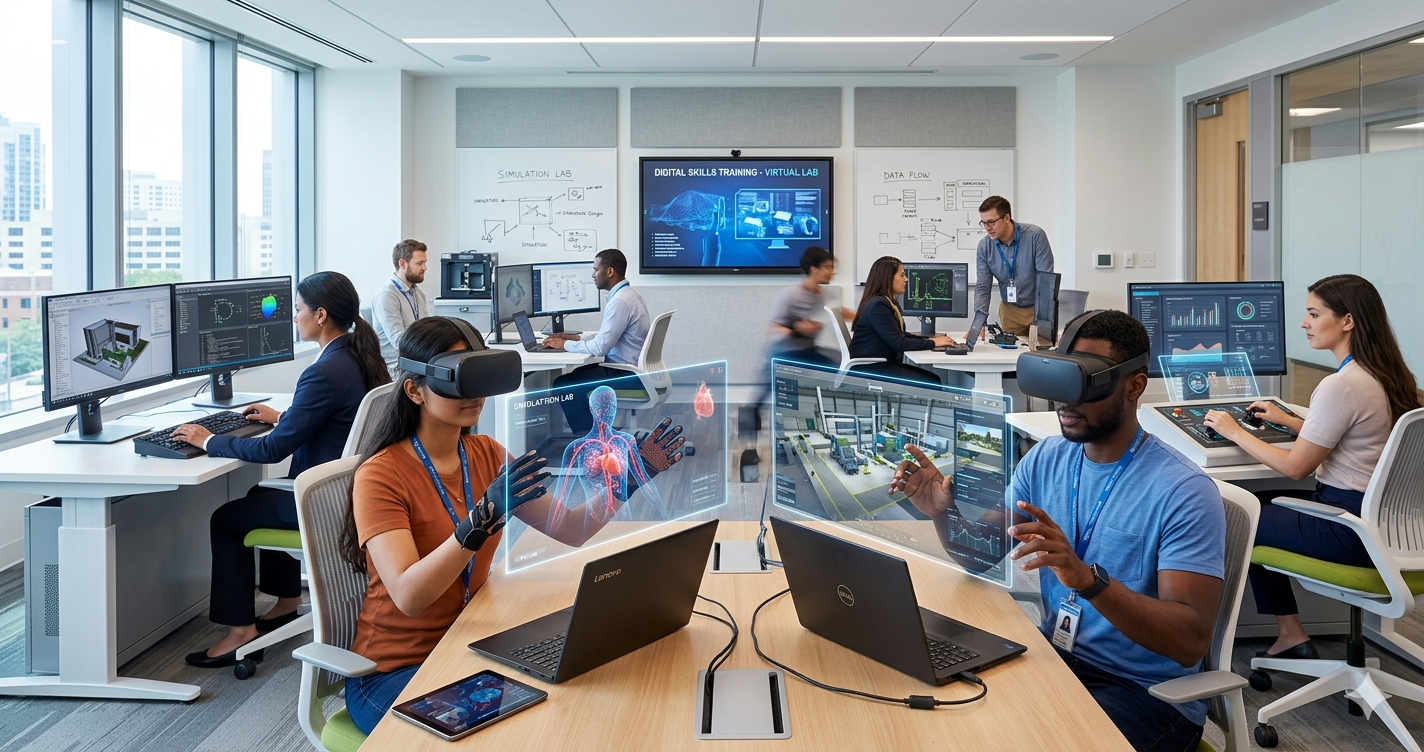
Simulated learning has emerged as a critical tool in modern education and skill development. By replicating real-world scenarios in a controlled environment, learners can practice, make mistakes, and gain hands-on experience safely.
Benefits of Simulated Learning
- Safe Environment: Learners can experiment and learn from errors without real-world consequences.
- Improved Retention: Experiential learning helps in retaining concepts longer than traditional methods.
- Skill Enhancement: Encourages critical thinking, problem-solving, and decision-making skills.
- Instant Feedback: Learners receive immediate feedback to improve performance.
- Cost-Effective Training: Reduces costs associated with real-world training setups.
Applications
- Medical and Healthcare: Practicing surgeries and emergency responses.
- Engineering and Technology: Simulating machines, networks, or software environments.
- Corporate Training: Crisis management, customer service, and team-building exercises.
Conclusion
Integrating simulated learning into educational programs bridges the gap between theory and practice. It prepares learners to confidently handle real-life situations, making learning more engaging and effective.